Inquisitors

Designing a Cohesive Faction Mechanic in SWGoH

Purge 7+ Characters πŸ”¨ Builder-Spender System πŸ“Š Live Service Evolution
← Back to Projects

Role: Game Designer I, first 6 months on SWGoH
Timeline: 2019-2020
Team: Small live team, shipped collaboratively

Goal: Build a faction that hard counters Jedi, stays fair elsewhere, and scales in live service.

Mechanic: Purge, a stackable resource powering a builder-spender-checker loop.

Outcome: Purge became the identity for 7+ Inquisitorius kits and remained the backbone as the faction matured.

The Challenge

Jedi squads, including Kenobi-led teams, dominated PvP. We needed a faction that beat Jedi reliably, did not overrun the rest of the meta, and had room to grow with future kits like Grand Inquisitor and, later, Third Sister.

Context

Past faction systems were lightly documented and patterns were not yet codified. We were a young live team working inside a complex, interdependent combat model. My contribution centered on proposing Purge and establishing its initial patterns through Second Sister and Eighth Brother so later work had a clear starting point.

Design Constraints

"Give the faction a shared resource that feels like a hunt and creates simple hooks for future kits, without raising power everywhere else."
Purge Icon

Mechanic: Purge

Purge is a stackable, resistible, dispellable debuff.

  • Cap: 6 stacks per target
  • Behavior: Abilities may read the current stack count or consume stacks. Effectiveness typically scales with stacks. Purge itself has no inherent threshold effects unless a specific ability defines one.
  • Counterplay note: Purge was dispellable for counterplay, which made Jedi cleanses a real risk.
  • Clarity on thresholds: By default Purge has no intrinsic breakpoints; any threshold behavior comes from individual abilities. For example, some spenders add effects at 5 or 6 stacks.

Ability Functions

Abilities fill three main functions, and most kits include all three:

  • Builders – apply Purge.
  • Spenders – consume Purge for control or damage.
  • Checkers – grant bonuses when a target already has Purge.
πŸ”¨
Builders
Apply Purge
πŸ’°
Spenders
Consume Purge for control or damage
🎯
Checkers
Grant bonuses when a target has Purge

Abilities can be hybrid. For example, build then spend, or check then build. This taxonomy is at the ability level, not the character level.

Execution: First Two Inquisitors

Second Sister
Second Sister
My first character, first Inquisitor released
  • Basic applies 1-2 Purge, with extra value versus Jedi
  • Special 1 deals high damage and crits harder against Purged enemies
  • Special 2 consumes up to 5 stacks for stun and turn meter drain
Eighth Brother
Eighth Brother
My second character, fourth Inquisitor released
  • Aggressive spender that escalates effects based on stacks consumed
  • At 5 stacks, applies permanent Armor Shred to reward coordinated building

These two kits established the loop: build stacks, spend for payoff, rebuild. They also created space for future "checkers" that only needed to read Purge and respond.

The Core Loop

  1. Build – apply Purge stacks with basics and specials.
  2. Spend – cash out stacks for control or damage.
  3. Rebuild – re-apply Purge so the team can repeat the payoff.
1
πŸ“€
BUILD
2
πŸ’₯
SPEND
3
πŸ”„
REBUILD

This loop runs for the whole battle, giving Inquisitor squads a clear rhythm: ramp into payoff, then reset and repeat.

What Missed at Launch

Reception Issues

Reception was negative at launch and power under-shot against top Jedi teams. As a result, mass cleanse could erase our progress building Purge, especially in Jedi matchups.

AI Limitations

The AI did not value Purge density or optimal cash-outs, which limited defensive value.
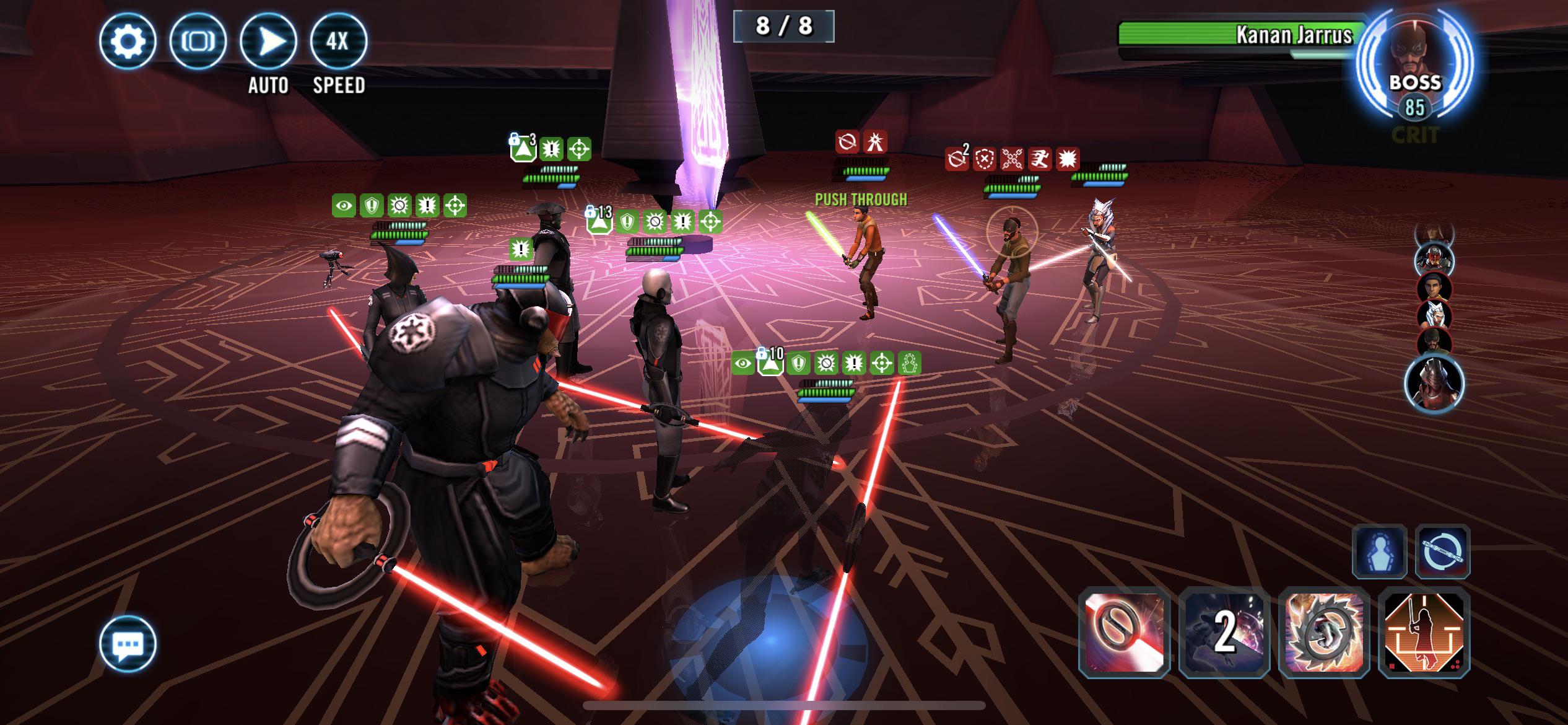
Inquisitors in combat showing Purge stacks

How We Corrected in Live Service

Grand Inquisitor

Grand Inquisitor

Start-of-battle Purge across all enemies, punish Protection Up, and gain turn meter when Purge is consumed or cleansed. This raised uptime and kept the team on offense.

Third Sister Reva

Third Sister (Reva)

Built for Grand Arena. Applies mass Purge, consumes one stack from each enemy for broad debuffs, and adds cleanse punish like Deathmark. This improved defensive reliability and made cleansing a meaningful decision.

Live updates addressed that risk with uptime and cleanse punish. Together, these changes preserved counterplay while giving the faction the tools to meet its Jedi-counter goals.

Success Criteria & Outcomes

Success Criteria

  • Inquisitor squads should reliably counter top Jedi teams without becoming oppressive against non-Jedi squads.
  • Purge should be the clear faction identity, with simple builder / spender / checker hooks for future kits.
  • Counterplay must remain intact: Jedi cleanses should matter, but not erase all progress with no consequences.
  • The AI should handle basic build–spend decisions well enough for common defensive modes.

Outcomes

  • At launch, Inquisitors under-shot against top Jedi and struggled on defense, especially when mass cleanse erased Purge progress.
  • Live updates through Grand Inquisitor and Third Sister raised Purge uptime and added cleanse punish, bringing the faction into the intended Jedi-counter band.
  • Purge became the shared mechanic across 7+ Inquisitorius kits and stayed consistent as the faction expanded.
  • Documented patterns and consistent wording made it easier for other designers to plug new kits into the system without destabilizing the meta.

Process Changes I Pushed

Pushed for faction-level documentation that called out team mechanics and simple hooks other designers could use at a glance, for example "prefers Crit Chance," "assists when attacking debuffed targets," or "gains value when Purge is present."

Used consistent naming and wording for Purge interactions so later kits could reuse the same pattern.

Design Takeaways

  • Counterplay needs limits. If the win condition can be erased, add consequences or reliable uptime.
  • Validate base power before combo depth.
  • Design for how players actually use the content. In SWGoH that often means autoplay, so loops should remain reliable when the AI makes decisions.
  • Document small, reusable patterns while you ship.

Professional Takeaways

  • Speak up early and keep showing evidence as you learn more.
  • Own the mechanic. Be the reviewer of record so the pattern improves over time.
  • Share the "why" so knowledge survives team changes.

Takeaway

Great faction design is more than a clever resource. It is about recognizing risks early, setting guardrails, and making the pattern easier to extend. Purge was not perfect at launch, but it became a durable identity that later kits could build on, and it made me a more rigorous, systems-minded designer.

Explore More Projects

← All Projects Cal Kestis Design β†’
↑ Back to Top